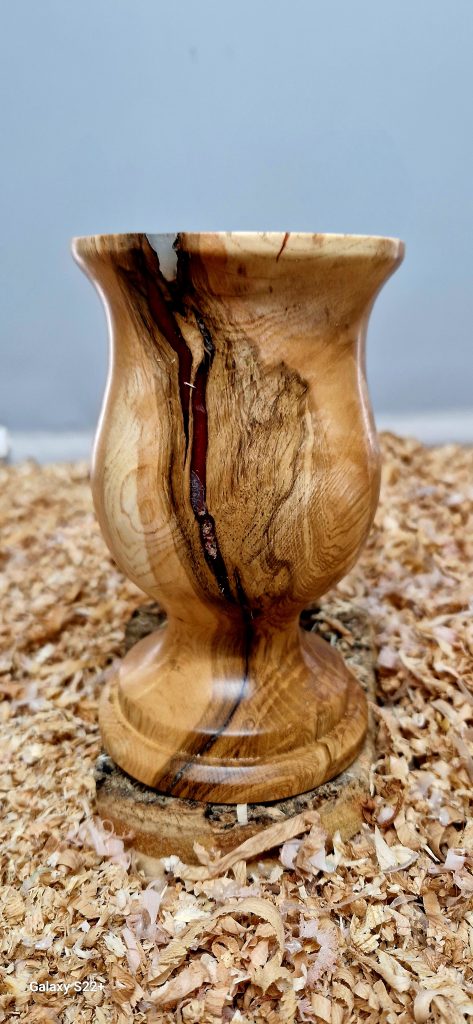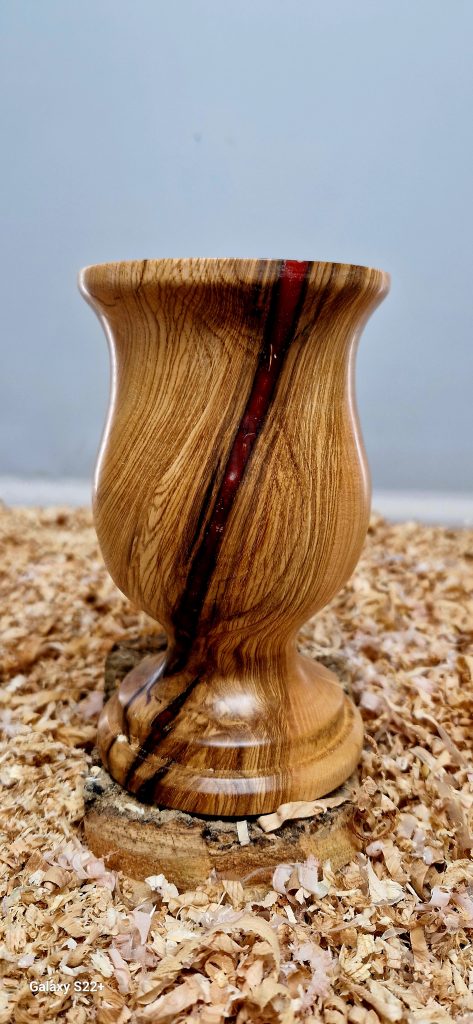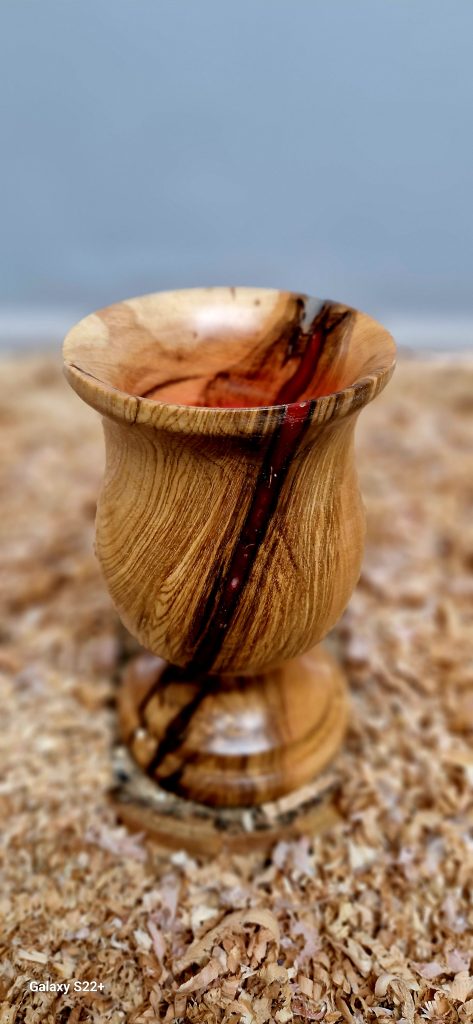
King Arthur's Goblet
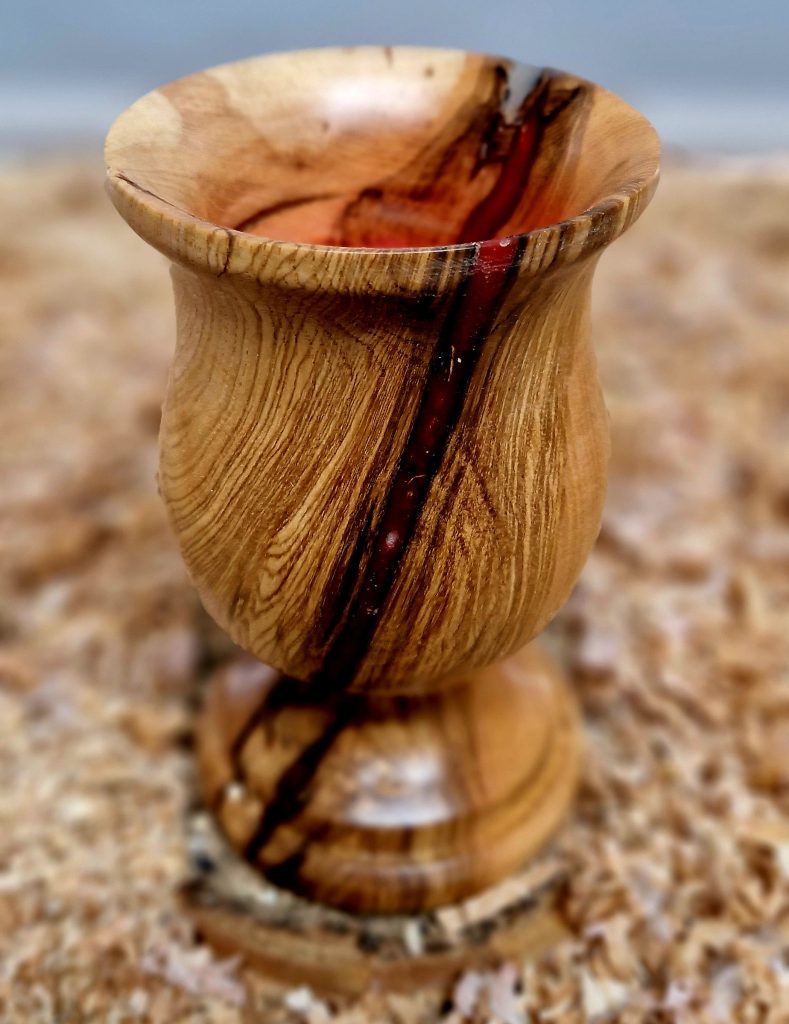
The Scar of Excalibur
This piece began, as many do, with nothing more than a discarded block of oak — weathered, forgotten, its edges rough with time. Under the steady hum of the lathe and the patient rhythm of steel against timber, it began to take form. A stem emerged. A bowl deepened. What was once timber became something ceremonial… something worthy of a king’s table.
But the grain had other ideas.
As the oak opened beneath the chisel, wild and twisted patterns revealed themselves — knots like clenched fists, dark lines running deep as old wounds. It felt less like shaping wood and more like uncovering a memory. And the memory it whispered was not one of triumph… but of heartbreak.
This is King Arthur’s Goblet — or what remains of it.
The legend tells that Arthur once raised this goblet high within the great hall of Camelot, its rim catching the glow of torchlight as he toasted his Queen, Guinevere. Laughter rang from stone walls. Steel armour clinked. Hope, for a moment, was unbreakable.
But even in Camelot, shadows have long memories.
When word reached Arthur of Guinevere’s secret bond with Lancelot — his most trusted knight, his brother in arms — the wound cut deeper than any blade. Honour, loyalty, love… all fractured in an instant. And in that storm of grief and fury, Arthur did not think as a king. He acted as a man betrayed.
He seized Excalibur.
The blade that had united kingdoms, that had split shields and legends alike, came down not upon an enemy… but upon the goblet itself. One clean, merciless strike.
Steel met oak.
The edge did more than split timber — it tore through ceremony, through trust, through everything the vessel had symbolised. The oak, bound so tightly to honour and feast, seemed almost to bleed. Not sap. Not water. But a deep, crimson sorrow that ran into the wound and set like a scar.
That scar remains.
A river of red resin, burning through the grain like a frozen scream, marking the moment where legend turned to lament. The wood closed around it, but it did not forget.
Now turned and polished once more, the goblet stands restored but never erased. Its surface is smooth to the hand, yet its story runs beneath the fingertips. It is not a vessel of celebration alone — it is a reminder that even kings are human, and even legends are carved by pain.
This is no ordinary goblet.
It is part myth.
Part memory.
Part warning.
A story you can hold — where steel once struck, and oak chose to endure.